DIFC Academy proudly presents a comprehensive, practitioner‑led programme designed to equip finance professionals with the depth, breadth, and practical insight required to operate confidently across the full Islamic finance ecosystem.
Programme Overview
Structured as six standalone, yet interconnected modules, the series allows participants to tailor their learning journey, whether by enrolling in individual modules aligned to their professional needs or by completing the full programme for a holistic, end‑to‑end perspective. Each module is designed to be highly applied, combining case studies, market examples, and interactive discussions to ensure immediate relevance to professional roles.
Aligned with the UAE leadership’s ambition to position the country as a global hub for Islamic finance, the halal industry, and Islamic philanthropy, the programme supports professionals and institutions in building internal capabilities, enhancing decision‑making skills, and developing future‑ready expertise. This is especially critical within a rapidly expanding and evolving financial landscape, enabling stakeholders to identify and capitalize on the wide range of opportunities emerging under the UAE Strategy 2031.
Participants completing the full series gain a structured learning pathway, a DIFC Academy Certificate, and the opportunity to develop cross‑disciplinary insight that reflects how Islamic finance operates in practice: across products, institutions, markets, risk-management, and emerging technologies.
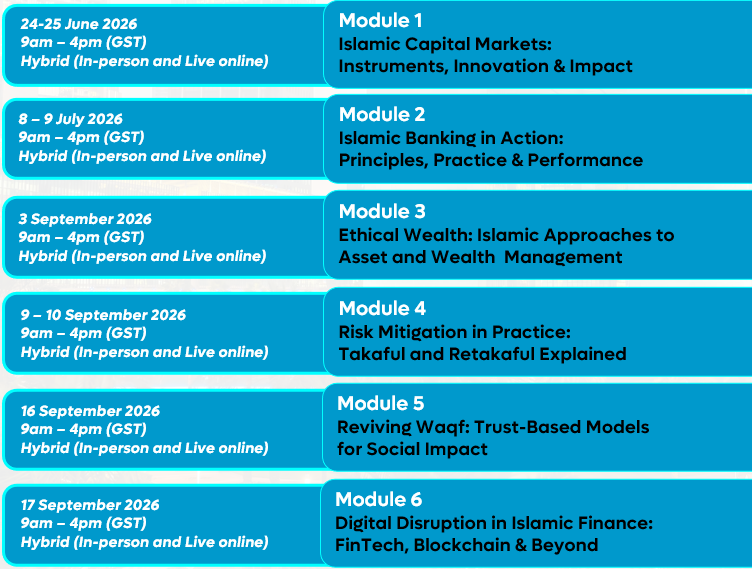
Programme Details
- 6 Modules
- 63 Total Learning Hours | 9 Training Days
- Hybrid (In-person at DIFC Academy and Live online via Teams)
- Live Assessments | Self-paced assessments via the LMS
- 24 DLAD CLPD Points
Purpose
Unlock a deeper understanding of the fast‑growing Islamic finance industry through a structured series of professional training courses designed for both emerging talent and seasoned practitioners.
This programme provides a comprehensive journey through the foundations of Shariah‑compliant finance, covering essential principles, key contracts, Islamic banking operations, sukuk, takaful and Retakaful, governance and compliance, and ethical investment frameworks.
Each course blends practical insights with real‑world applications, equipping participants with the knowledge and skills needed to navigate and contribute to the UAE’s dynamic Islamic finance landscape.
Tailored to support career advancement and institutional capacity building, this series serves as an ideal gateway to mastering modern Islamic financial practices and aligning with the UAE’s national vision for sector’s growth.
Outcomes
- Improved alignment with UAE Strategy 2031
- Direct interaction with subject-matter experts
- Core Knowledge Acquisition
- Sector-Specific Exposure
- Practical Application Skills
- Analytical & Decision-Support Skills
- Enhanced internal capacity in Islamic finance literacy
- Stronger cross-functional coordination capability
- Networking opportunities leading to peer learning across institutions
Who Should Attend?
- National strategy & taskforce members
- Heads of Islamic Banking at Windows
- Heads of Product structuring at Islamic banks and windows
- Heads of Treasury at Islamic financial institutions
- Risk, Shariah compliance, and governance officers
- Sukuk origination and capital markets players
- Corporate Law firms (banking, capital markets, dispute resolution)
- Islamic asset and wealth managers
- Institutional investors and family offices
- Rating agencies, financial consultants and capital market brokers
MODULE 1
Islamic Capital Markets: Instruments, Innovation & Impact
Module Overview
This flagship module provides senior professionals with a practical and strategic understanding of Islamic capital markets, with a particular focus on sukuk structuring, governance, risk allocation, market execution and default scenario.
Moving beyond introductory concepts, the module examines how sukuk are engineered, documented, priced, and deployed across sovereign, corporate, project‑based, and ESG‑linked transactions, within both regional and global markets. Particular emphasis is placed on the UAE’s role as a leading hub for Islamic capital markets, including regulatory frameworks, investor dynamics, and cross‑border structuring considerations.
Through real‑world case studies and applied discussions, the module highlights the growing convergence of Islamic finance, sustainable finance, and impact investing, demonstrating how Islamic capital market instruments can support infrastructure development, halal industry financing, and socially responsible investment outcomes.
Course Description
This advanced module provides an in‑depth exploration of Islamic capital markets, with a strong focus on sukuk and innovative Sukuk structures shaping global and regional markets. Designed for capital market professionals, the course moves beyond fundamentals to examine how a Sukuk is structured, governed, priced, and deployed to meet financing, sustainability, and development objectives Islamically.
Participants will gain practical insights into the design and execution of sukuk transactions, including sovereign, corporate, project‑based, and ESG‑linked issuances. The module also examines market infrastructure, regulatory frameworks, investor dynamics, and cross‑border listing considerations, with particular emphasis on the UAE’s role as a global hub for Islamic capital markets.
Learning Objectives
By the end of this session, participants will be able to:
- Understand the foundations of Islamic capital markets and sukuk, including key Sharia principles, the role of sukuk in fundraising, and distinctions from conventional instruments such as bonds.
- Analyze sukuk structures, processes, and risks, including structuring techniques (Ijarah, Mudarabah, Musharakah, Wakalah), issuance processes, pricing considerations, investor dynamics, and key legal, regulatory, and Sharia issues in documentation.
-
Evaluate the strategic and practical applications of sukuk, including their economic role, tradability, comparative risk-return profile, and relevance within modern financial markets and investment portfolios.
Course Outline
Foundations
- Brief introduction of Islamic Finance
- How Islamic banks do fundraising
- Difference between Bonds and Sukuk
- Sukuk in Summary
- Risk Paradigm: Sukuk Vs. Other Instruments
- Main ingredients for making a Sukuk
- Parties to a Sukuk Transaction
Risk, Structure and Governance
- Sukuk Structures Comparison: Pricing-Asset-Risk
- Tradability of a Sukuk
- Originator’s Analysis of Investment Based Sukuk
- Generic Sukuk Documentation
- Sukuk Structure Diagrams
- Generic Sukuk Structure
- Sukuk Based on Sale Contract (Murabahah)
- Sukuk Based on Lease Contract (Ijarah)
- Sukuk Based on Fund Management Contract (Mudarabah)
- Sukuk Based on Partnership Contract (Musharakah)
- Sukuk Based on Investment Agency Contract (Wakalah)
Assessments
- Short quizzes for each session
- End-of module Master quiz -
- Group exercises
Who should attend
- Capital markets professionals and treasury teams
- Islamic and conventional banks with Islamic windows
- Sukuk origination and structuring teams
- Legal, Shariah, risk, and compliance professionals
- Regulators, policymakers, and advisory professionals
- Institutional investors, asset managers, and family offices
Why you should attend
- Develop practical sukuk structuring capability, not just theoretical knowledge
- Gain insights from real‑world regional and international sukuk transactions
- Strengthen your ability to evaluate and participate in Islamic capital market deals
- Understand how sukuk support sustainability, ESG, and impact finance objectives
- Align professional expertise with the UAE Islamic Finance Strategy 2031
Course Schedule & Delivery Format
- Dates: 6-7 May 2026
- Time: 9:00 AM – 4:00 PM (Gulf Standard Time)
- Format: In‑person
- Venue: DIFC Academy
Course Duration
- 14 High-Impact Learning Hours
- 30 minutes Optional Post Session Networking
- 30 minutes Indicative Self-paced Learning (Quiz) via DIFC Academy LMS
Lecturer
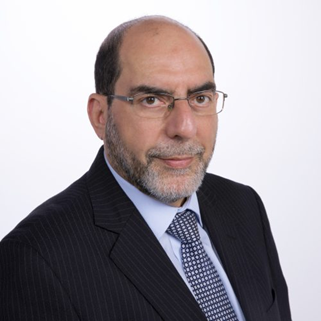
Sohail Zubairi
Islamic Finance Lead - DIFC Authority
Sohail Zubairi is an Islamic finance specialist with extensive experience in Islamic banking, sukuk, Islamic capital markets, Shariah governance, and policy‑oriented advisory. His work focuses on the practical application of Islamic finance across financial institutions, regulators, and public‑sector stakeholders, with a strong emphasis on structuring, governance, and market development.
He is AAOIFI‑certified as a Shariah Advisor and Auditor (CSAA) and an IICRA‑certified Islamic Arbitrator and Expert (CIAE). Sohail regularly delivers advanced executive and professional programs on Islamic finance, sukuk, and Islamic capital markets, supporting capacity building aligned with national and institutional strategies, including initiatives linked to the UAE Strategy 2031.
Sohail is recognised for his ability to bridge classical Shariah principles with modern financial practice, offering clear, applied insights that are relevant to regulators, bankers, lawyers, investors, and policymakers engaged in Islamic finance and the broader Islamic economy.
MODULE 2
Islamic Banking in Action: Principles, Practice & Performance
Module Overview
This two-day module provides a practical introduction to Islamic banking, linking core Sharia principles with real-world financial applications. Participants will explore the foundations of Islamic finance, its governance frameworks, and how it differs from conventional banking models.
The programme focuses on the structuring of key Islamic financial products, such as Murabaha, Ijarah, Mudarabah, and Musharakah, highlighting their application across retail, corporate, and investment banking, alongside risk mitigation and compliance considerations.
Delivered through interactive discussions and practical exercises, the module equips participants with the knowledge to understand, evaluate, and apply Islamic banking solutions in today’s financial environment.
Course Description
This course is designed for banking and finance professionals, regulators, and corporate practitioners seeking a clear and practical understanding of Islamic banking products and how they differ from conventional financial structures. It is also valuable for professionals considering transition to Islamic finance, working in Islamic banking windows, or involved in product development, risk, compliance, and governance functions.
Learning Objectives
By the end of this course, participants will be able to:
- Understand the core principles of Islamic finance, including its asset‑backed and risk‑sharing aspect.
- Differentiate between Islamic and conventional banking models
- Analyze how Islamic financial products are structured, linking underlying contracts to real‑world banking solutions.
- Evaluate retail banking products, and assess corporate and investment banking solutions,
- Understand the role of Internal Sharia Supervisory Committee for Sharia governance
- Know how Islamic banks ensure compliance through regulatory oversight.
- Identify key risks and operational considerations in Islamic banking, including structuring, liquidity, and compliance challenges.
- Apply basic Islamic finance concepts to practical scenarios and product discussions within financial institutions.
Course Outline
- Evolution of Islamic banking and its global growth trajectory
- Islamic finance role model in addressing conventional financial crises
- Economic philosophy of Islam and the objectives of Sharia (Maqasid al-Sharia)
- Sources of Sharia and their application in finance
- Understanding riba (interest) and the distinction between loan capital and risk capital
- Sharia perspective on money as a commodity and rules governing currency trading
- Differences between Islamic and conventional banking models
- Deposit products and profit distribution mechanisms in Islamic banks
- Corporate governance in Islamic banking:
- Role of Higher Sharia Authority and Internal Sharia Supervisory Committee
- Introduction to Sharia-nominate contracts: Types and key requirements
- Understanding of how to structure a hybrid model
Who Should Attend
- Banking and finance professionals (retail, corporate, investment)
- Risk, compliance, and governance professionals
- Regulators and policymakers
- Product development and strategy teams
- Professionals in Islamic banking windows
- Corporate finance and treasury professionals
- Individuals transitioning into Islamic finance
Why you should attend
- Gain a practical understanding of how Islamic banking products are structured and applied
- Understand how Sharia principles translate into real-world banking operations
- Build confidence in engaging in product discussions, risk assessment, and decision-making
- Strengthen your knowledge of governance, compliance, and regulatory frameworks
- Prepare to work in or transition into the growing Islamic finance sector
Assessments
- Short group quizzes for each session
- End-of module individual quiz covering the entire course content
- Case Studies
- Group discussion
Course Details
Date: 8-9 July 2026
Time: 9:00 AM – 4:00 PM (GST)
Format: In person
Venue: DIFC Academy
Lecturer
Sohail Zubairi
Islamic Finance Lead - DIFC Authority
Sohail Zubairi is an Islamic finance specialist with extensive experience in Islamic banking, sukuk, Islamic capital markets, Shariah governance, and policy‑oriented advisory. His work focuses on the practical application of Islamic finance across financial institutions, regulators, and public‑sector stakeholders, with a strong emphasis on structuring, governance, and market development.
He is AAOIFI‑certified as a Shariah Advisor and Auditor (CSAA) and an IICRA‑certified Islamic Arbitrator and Expert (CIAE). Sohail regularly delivers advanced executive and professional programs on Islamic finance, sukuk, and Islamic capital markets, supporting capacity building aligned with national and institutional strategies, including initiatives linked to the UAE Strategy 2031.
Sohail is recognised for his ability to bridge classical Shariah principles with modern financial practice, offering clear, applied insights that are relevant to regulators, bankers, lawyers, investors, and policymakers engaged in Islamic finance and the broader Islamic economy.
MODULE 3
Ethical Wealth: Islamic Approaches to asset and Wealth Management
Module Overview
Ethical Wealth: Islamic Approaches to Asset and Wealth Management is a comprehensive professional programme that explores how Islamic finance delivers ethical, responsible, and purpose-driven wealth creation. Rooted in Shariah principles and global regulatory standards, the course provides practical insight into Shariah‑compliant asset classes, portfolio construction, risk management, governance, and wealth planning, bridging theory with modern capital markets and sustainability considerations.
Course Description
This intensive programme offers a structured and practical introduction to Islamic asset and wealth management, going beyond “interest‑free finance” to examine Islamic finance as a complete ethical and economic system grounded in Maqasid al‑Shariah.
Participants will explore the foundations of ethical investing in Islam, including the prohibitions of riba, gharar, and maysir, and how these shape modern financial products and investment behaviour. The course examines major Shariah‑compliant asset classes: equities, sukuk, money market instruments, real assets, alternatives, and emerging areas such as digital assets, alongside real-world portfolio strategies used by Islamic fund managers.
Key modules address risk management, Shariah governance and screening methodologies, Zakat and wealth purification, Takaful and estate planning, and the growing convergence between Islamic finance and ESG / sustainable finance. The programme concludes with an overview of the global and regional regulatory landscape, including AAOIFI, IFSB, DIFC/DFSA, and UAE frameworks.
Learning Objectives
By the end of this session, participants will be able to:
- Understand the ethical and Shariah foundations of Islamic wealth and asset management, including Maqasid al‑Shariah, and how they distinguish Islamic finance from conventional financial systems.
- Identify and assess Shariah‑compliant asset classes, investment strategies, and risk considerations, including equities, sukuk, money markets, alternatives, and ESG‑aligned Islamic finance solutions.
- Apply practical knowledge of Islamic wealth planning and governance, including Shariah screening, Zakat, Takaful, estate planning, and the relevant regulatory and institutional frameworks.
Why you should attend
- Gain a structured, end‑to‑end understanding of Islamic asset and wealth management, from principles to practice
- Build credibility and confidence in advising on or managing Shariah‑compliant investments in a regulated environment
- Understand real‑world investment structures used by Islamic funds, sukuk issuers, and wealth managers
- Strengthen governance and compliance knowledge, including Shariah screening, risk management, and regulatory expectations
- Integrate ethics, sustainability, and finance, understanding how Islamic finance naturally aligns with ESG objectives
- Enhance professional relevance in one of the fastest‑growing segments of global capital markets, particularly in the GCC and DIFC ecosystem
Who Should Attend
This course is designed for professionals and stakeholders involved in, or seeking exposure to, ethical and Shariah‑compliant finance, including:
- Asset and wealth managers
- Private bankers and relationship managers
- Family office professionals and investment advisers
- Risk, compliance, and governance professionals
- Finance, treasury, and strategy professionals
- Regulators and policymakers
- Shariah scholars, advisors, and Islamic finance practitioners
- Professionals transitioning from conventional to Islamic or sustainable finance
- Individuals involved in Zakat, Waqf, and Islamic social finance institutions
Course Details
Date: 3 September 2026
Time: 9:00 AM – 4:00 PM (GST)
Format: In person
Venue: DIFC Academy
Lecturer
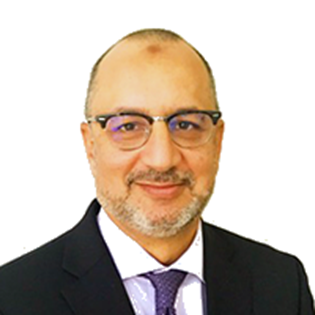
Abdul Kadir Hussain
Managing Director - Fixed Income Asset Management
Arqaam Capital
Abdul Kadir Hussain is the Head of Fixed Income Asset Management at Arqaam Capital since September 2016, and has a comprehensive work experience in the financial industry. He started his career at Credit Suisse in 1999, where he quickly advanced from Vice President to Managing Director. During his time at Credit Suisse, he was recognized as a top-ranked high yield and distressed debt analyst in Asia. Abdul Kadir then moved to prop trading in London, running a global credit prop trading book before finally relocating to Dubai.
In 2006, Abdul joined Mashreq Capital as the CEO, where he successfully established and managed the asset management business for 10 years. Under his leadership, Mashreq's assets under management grew from $300 million to $1.6 billion over the course of 5 years. Abdul Kadir also managed two award-winning Fixed Income funds during his tenure.
Abdul Kadir Hussain completed his Bachelor of Science (BS) degree in Economics and Finance from The Wharton School between 1983 and 1986, and his Master of Business Administration (M.B.A.) degree from UCLA Anderson School of Management from 1988 to 1990.
MODULE 4
Risk Mitigation in Practice: Takaful and Retakaful Explained
Module Overview
This intermediate-level Takaful program is designed to provide professionals with a practical and integrated understanding of how Takaful operates in real-world environments. Moving beyond theory, the course focuses on the application of Takaful principles across product development, operations, risk management, investment, and governance. Participants will explore how Takaful models are structured and managed, how products are developed and approved within Sharia and regulatory frameworks, and how key business decisions are made in practice.
Course Description
The course is designed for professionals seeking a deeper, practice-oriented perspective on how Takaful functions across the full business lifecycle. The programme examines how Sharia principles are translated into operational, financial, and governance decisions, with particular emphasis on underwriting performance, ReTakaful as a risk mitigation mechanism, and investment management within Sharia-compliant constraints.
Participants will gain insight into how Takaful products are structured, approved, and administered, the interaction between regulation and Sharia governance, and the practical realities of managing contributions, expenses, surplus, and risk. Drawing on market practices in the GCC and applied case discussions, the course equips participants with the analytical and strategic tools required to navigate operational challenges, strengthen governance oversight, and support sustainable decision-making in Takaful institutions.
Key areas covered:
- The overall size of the Takaful industry globally and within UAE
- Growth areas and prospects of the Takaful industry viz. a viz. the UAE Strategy 2031
- Foundations and principles of Takaful within Islamic finance
- Comparative analysis: Takaful vs Conventional insurance
- Takaful operating models (Wakalah, Mudarabah, Hybrid)
- Product Development process
- Role of ReTakaful product development and Risk mitigation
- Regulatory frameworks in the GCC and the UAE
- Investment strategy of premium pool: Investment in sukuk and other Sharia-compliant portfolios
- Governance: role of Board of Directors, Sharia Supervisory Boards, and Management
- Practical challenges in profitability, growth, and sustainability
Learning Objectives
By the end of this session, participants will be able to:
- Understand and differentiate key Takaful models and structures
- Evaluate the financial and operational viability of Takaful entities
- Analyze the role of sukuk and Sharia-compliant instruments in portfolios
- Strengthening governance and oversight frameworks at board and management level
- Make informed, risk-aware strategic decisions in Takaful operations
Why you should attend
- Turn knowledge into practice: Apply Takaful concepts to real business situations
- Understand the full picture: From product design to operations, risk, and governance
- Apply global standards: Use AAOIFI and Islamic Financial Services Board in day-to-day decisions
- Strengthen decision-making: Evaluate trade-offs and contribute effectively to discussions
Who Should Attend
- Staff from Takaful industry for better understanding of their working environmnet
- Professional in Banks entrusted with managing Takaful Products
- Senior Insurance Professional who are in transition from conventional insurance to Takaful or managing Takaful window in conventional insurance company
- Risk & Compliance Professionals in Islamic or conventional financial industry
- Product and Business Development Managers in Islamic Banks and Takaful Companies
- Investment Bankers
Course Details
Date: 9 – 10 September 2026
Time: 9:00 AM – 4:00 PM (GST)
Format: In person
Venue: DIFC Academy
Lecturer
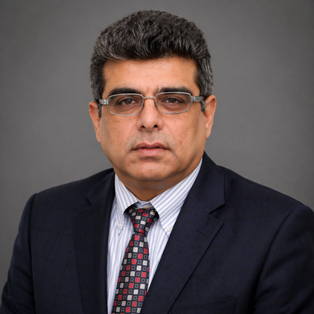
Parvais Siddiq
Board Member, SALAMA
Principal Consultant, High Performance Strategic & Operational Consulting
Parvaiz Siddiq is a senior practitioner in Takaful, Islamic finance, and insurance regulation with over 30 years of experience across the GCC and international markets. His expertise spans Shariah-compliant financial structures, prudential regulation, and institutional governance, with a particular focus on the financial and operational dynamics of Takaful models.
He holds an MBA from London Business School and is a Fellow of the Chartered Insurance Institute (FCII). He also holds the Chartered Property Casualty Underwriter (CPCU) designation from The Institutes (USA) and is an Associate of the Life Management Institute (ALMI).
Parvaiz has held senior executive roles within leading insurance and Takaful institutions, with responsibilities spanning underwriting, operations, risk management, and investment governance. He has been actively involved in the development and transformation of insurance and Takaful businesses, including strategic repositioning, capital optimization, and regulatory alignment initiatives.
He currently serves on the boards and board committees of insurance and financial services institutions, contributing to risk oversight, investment governance, and strategic decision-making. His board experience includes engagement with regulators, Shariah supervisory boards, and executive management on matters relating to capital adequacy, solvency, and fiduciary responsibilities.
His academic and training approach emphasizes analytical rigor and applied learning, covering Takaful structures (Wakalah and Hybrid models), regulatory frameworks in the GCC, solvency considerations, and investment strategy under Shariah constraints.
MODULE 5
Reviving Waqf: Trust-Based Models for Social Impact
Module Overview
This module represents DIFC Academy’s first dedicated offering focused on Waqf, providing senior professionals with a practical and strategic understanding of Islamic philanthropy. It provides a focused exploration of family and charitable Waqf structures, including key considerations around governance, preservation of Waqf assets and lifecycle management, including restructuring and winding up.
Course Description
This one‑day executive course provides a comprehensive and forward‑looking exploration of Islamic public endowment (Waqf), positioning it as both a traditional social institution and a modern financial structuring tool.
The course begins with foundational concepts and moves to a comparative analysis with conventional endowment models such as foundations and trusts. It then examines practical applications of Waqf in sectors like education, healthcare, and social welfare, and introduces contemporary models such as cash waqf, corporate waqf, and ESG‑aligned development finance.
Participants will further explore innovative integration mechanisms, including Waqf‑linked sukuk, public‑private partnership structures, and blended finance approaches, supported by regional and international case studies.
The course concludes by demonstrating how Waqf can create strategic value for financial institutions through new products, long‑term assets, client engagement opportunities, and alignment with sustainability agendas, ultimately reframing Waqf as a scalable instrument for both impact and commercial relevance.
Learning Objectives
By the end of this session, participants will be able to:
- Understand the foundations and evolution of Waqf, including its core principles, types, objectives, distinctions from Zakat and Sadaqah, and its historical and socio-economic role in Islamic finance
- Analyse Waqf structures, governance, and frameworks, including family and charitable Waqf, contemporary models such as cash and corporate Waqf, and the relevant legal, regulatory, and Sharia considerations, in comparison with conventional endowment structures
- Assess strategic applications and commercial relevance of Waqf, including its role in ESG and sustainable finance, as well as innovative instruments such as Waqf-linked Sukuk, blended finance, and public-private partnerships for financial institutions
Why you should attend
This course will help you reposition Waqf as a modern financial and strategic tool, unlock new business and impact opportunities, and build practical knowledge to design and implement innovative Waqf models aligned with UAE Strategy 2031. Also, the course will:
- Develop practical sukuk structuring capability, not just theoretical knowledge
- Reframe Waqf as a strategic financial tool instead of merely a charity organ
- Unlock new opportunities for financial institutions
- Stay aligned with UAE Strategy 2031
- Develop practical structuring knowledge
- Bridge finance, philanthropy, and ESG
- Learn from real‑world cases and global practices
- Position yourself at the forefront of innovation in Islamic finance
Who Should Attend
- Professionals in Banks entrusted with managing Takaful Products
- Senior Insurance Professional who are in transition from conventional insurance to Takaful
- Risk & Compliance Professional
- Product and Business Development Managers in Islamic Banks and Takaful Companies
- Finance & Investment Professionals
- Emerging Takaful Professionals
Course Details
Date: 16 September 2026
Time: 9:00 AM – 4:00 PM (GST)
Format: In person
Venue: DIFC Academy
Lecturer
Sohail Zubairi
Islamic Finance Lead - DIFC Authority
Sohail Zubairi is an Islamic finance specialist with extensive experience in Islamic banking, sukuk, Islamic capital markets, Shariah governance, and policy‑oriented advisory. His work focuses on the practical application of Islamic finance across financial institutions, regulators, and public‑sector stakeholders, with a strong emphasis on structuring, governance, and market development.
He is AAOIFI‑certified as a Shariah Advisor and Auditor (CSAA) and an IICRA‑certified Islamic Arbitrator and Expert (CIAE). Sohail regularly delivers advanced executive and professional programs on Islamic finance, sukuk, and Islamic capital markets, supporting capacity building aligned with national and institutional strategies, including initiatives linked to the UAE Strategy 2031.
Sohail is recognised for his ability to bridge classical Shariah principles with modern financial practice, offering clear, applied insights that are relevant to regulators, bankers, lawyers, investors, and policymakers engaged in Islamic finance and the broader Islamic economy.
MODULE 6
Digital Disruption in Islamic Finance: FinTech, Blockchain & Beyond
Module Overview
This module explores how Islamic financial institutions are evolving within an increasingly digital and innovation-driven environment. Focusing on the fintech ecosystem, participants will examine how emerging technologies, business models, and global developments are influencing Islamic banking, unlocking new opportunities for efficiency, scalability, and Shariah-compliant innovation.
Course Description
This module provides a forward-looking perspective on the integration of fintech within Islamic financial institutions. It examines the structure and development of fintech ecosystems, the distinction between disruption and innovation, and the strategic alignment between financial technologies and Shariah principles. Participants will also explore global case studies and emerging technologies shaping the future of finance, equipping them with the knowledge to navigate and leverage digital transformation within Islamic banking.
Key areas covered:
- Fintech and the broader fintech ecosystem
- Fintech ecosystem development frameworks and enablers
- Disruption, innovation, and transformation in financial services
- Synergies between fintech solutions and Islamic finance principles
- Global fintech developments and country-level case studies
- Emerging technologies shaping the future of finance
- Application of fintech within Islamic finance structures through practical use cases
Learning Objectives
By the end of this session, participants will be able to:
- Understand the structure and dynamics of the fintech ecosystem and its relevance to Islamic financial institutions
- Evaluate how innovation and emerging technologies can enhance Shariah-compliant financial models
- Assess global fintech trends and identify opportunities for application within Islamic banking contexts
Course Outline
1. Fintech and the Fintech Ecosystem
- Definition, evolution, and scope of fintech
- Key components and stakeholders within the ecosystem
- Role of fintech in modern financial services
2. Fintech Ecosystem Development Framework
- Core pillars of a fintech ecosystem
- Infrastructure, regulation, and innovation drivers
- Enabling environments for fintech growth
3. Disruption, Innovation, and Transformation
- Distinguishing disruption, innovation, and renovation
- Impact on traditional and Islamic banking models
- Strategic implications for financial institutions
4. Synergies with Islamic Finance
- Alignment between fintech and Shariah-compliant principles
- Opportunities for enhancing Islamic financial products and services
- Digital transformation within Islamic finance
5. Country Case Studies: Fintech Developments
- Overview of fintech ecosystems in key markets
- Comparative insights (e.g., UAE, Malaysia, UK)
- Regulatory approaches and implementation lessons
6. Way Forward: Emerging Technologies (Teaser Introduction)
- BigTech platforms (FANGs) and platform-based finance
- Big Data and analytics in financial decision-making
- Artificial Intelligence, Machine Learning, and Deep Learning (Web 4.0)
- Robotic Process Automation (RPA) in operations
- Internet of Things (IoT) in financial ecosystems
- Blockchain and distributed ledger technologies
- Quantum computing in finance
7. Applied Learning
Group Assignment: “The Buildup” – Fintech Case for Islamic Finance
- Identify a relevant Islamic finance structure (e.g., sales-based, equity-based, Ijarah, Sukuk, or social finance)
- Establish the need for fintech integration within the selected model
- Develop a practical, Shariah-aligned fintech use case
- Present key benefits, challenges, and implementation considerations
Why you should attend
-
Gain a clear understanding of how fintech is reshaping Islamic financial services
-
Identify practical opportunities to integrate technology within Shariah-compliant frameworks
-
Strengthen your strategic perspective on innovation in Islamic banking
-
Stay informed on emerging technologies and global fintech developments
-
Enhance your ability to contribute to digital transformation initiatives within your organisation
Who Should Attend
- Professionals working in Islamic banks and financial institutions
- Fintech and digital transformation professionals in financial services
- Regulators and policymakers involved in financial innovation and Islamic finance
- Consultants and advisors supporting banking and fintech initiatives
- Mid- to senior-level executives responsible for strategy, innovation, and transformation
Course Details
Date: 17 September 2026
Time: 9:00 AM – 4:00 PM (GST)
Format: In person
Venue: DIFC Academy
Lecturer

Dr. Mughees Shaukat
Executive Advisor, IIRA, Bahrain/Oman; Investment Board Member, IVFRT, Ijara, Republic of Tartastan; Managing Director, Panacea Consulting, Bahrain
Dr. Mughees Shaukat is Global Islamic Financial Strategist; Specialist Islamic Investment & Fund management, Oman, Bahrain and Tatarstan for GCC, CIS & Asia; Fintech specialist, MIT, USA; Director, Carbon CX, Canada & GCC; Advisor, IIRA, Bahrain and Oman; Strategic Partner ESGQ for Green Finance, Kazakhstan, former Senior Manager, AAOIFI, Bahrain; former Islamic Banking Advisor, Bank Nizwa, Oman; & pioneer Head, Islamic Finance, CBFS; Central Bank of Oman. He is among key pioneering figures in setting up Islamic finance in Oman.
He is a thought leader, prolific author, renowned public speaker & prominent contributor in local & global policy& strategic affairs. Under his leadership& global contributions, Mughees made CBFS into a global entity, winning GIFA award by the President Islamic Republic of Pakistan. He is also Awarded as “Fintech Leader of the Year” 2020 by Turkey& features on the front cover of a top international financial magazine as Global Personality, Strategist& Thought Leader. He is PhD in Economics & Finance, specializing in Oman's Entrepreneurship & Policies for Entrepreneurial Ecosystems. While holding multiple global strategic & advisory positions. Dr. Mughees is also Ex-Vice Chairman of the AAOIFI, Education Board, Bahrain; Member, Society of Advancement of Socio-Economics (SASE), France; Member of The Western Economic Association International (WEAI), USA, Member, International, select, Expert Panel, Central Bank of Bahrain on Islamic Profit Rate Bench Mark, Member of BLOCKCHAIN Society, Oman & Certified Shariah Adviser& Auditor, CSAA, AAOIFI, among others. He also holds MSc in Islamic finance, the IFQ UK certification & a number of other certifications in core areas of Finance & Islamic Finance.
Dr. Mughees is a passionate contributor in New Age Fintech Finance & Islamic/Halal Finance, Regulatory Policies & Multiple Polar Global Economic System. His further focus includes, Macroeconomic Policies, Product Innovations, Entrepreneurship, Behavioral & Institutional Economics, Environmental Economics, Halal Industry among others. Alongside wealth of teaching and academic experience, Mughees has published over 50 articles & research papers & has so far delivered over 200 policy talks, Keynote addresses, expert sessions, high level presentations, research & executive lectures, globally. Mughees so far founded/created, organized & delivered over 35 International conferences, seminars, symposiums & forums. He is also the Chair & Co-Chair in multiple international conferences and has delivered over 150 trainings, designed and multiple curricula & over 40 certification programs including novel programs on Leadership in Islamic Finance, Entrepreneurship & Venture Capital, CRM, Regulatory Framework, Climate change and Fintech
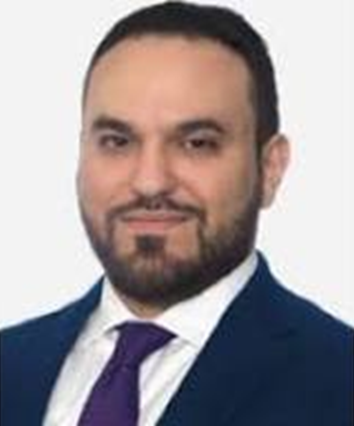
Samir Safar-Aly
Director, FinTech & Financial Services | PwC Legal Solicitor (England & Wales) | Legal Consultant (Dubai)
PwC Middle East
Samir is a seasoned management consulting professional with 15 years of experience in financial services across the GCC, advising sovereign wealth funds, central banks, regulators, and government entities on transformation and financial sector innovation. He leads Virtual Assets initiatives at PwC Middle East, supporting banks, VASPs, and regulators in developing and scaling digital asset ecosystems.
Samir is part of PwC’s global crypto and CBDC teams, with expertise spanning strategy, operations, and regulation. Has supported the design of virtual asset regulatory frameworks, advised banks entering the space, and guided fintech policy and national innovation strategies across the GCC. He is an active mentor in fintech accelerators, industry speaker, and community builder. Certified by Harvard Law School/IOSCO. Passionate about innovation, with experience in AWM and SWF strategy, and a personal interest in endurance sports and mountaineering.
Alumni and Corporate discounts available - email us at [email protected] or call 04 362 2376
DIFC Courts Registered practitioners get 10% discount
For inquiries, please email [email protected]
Select